
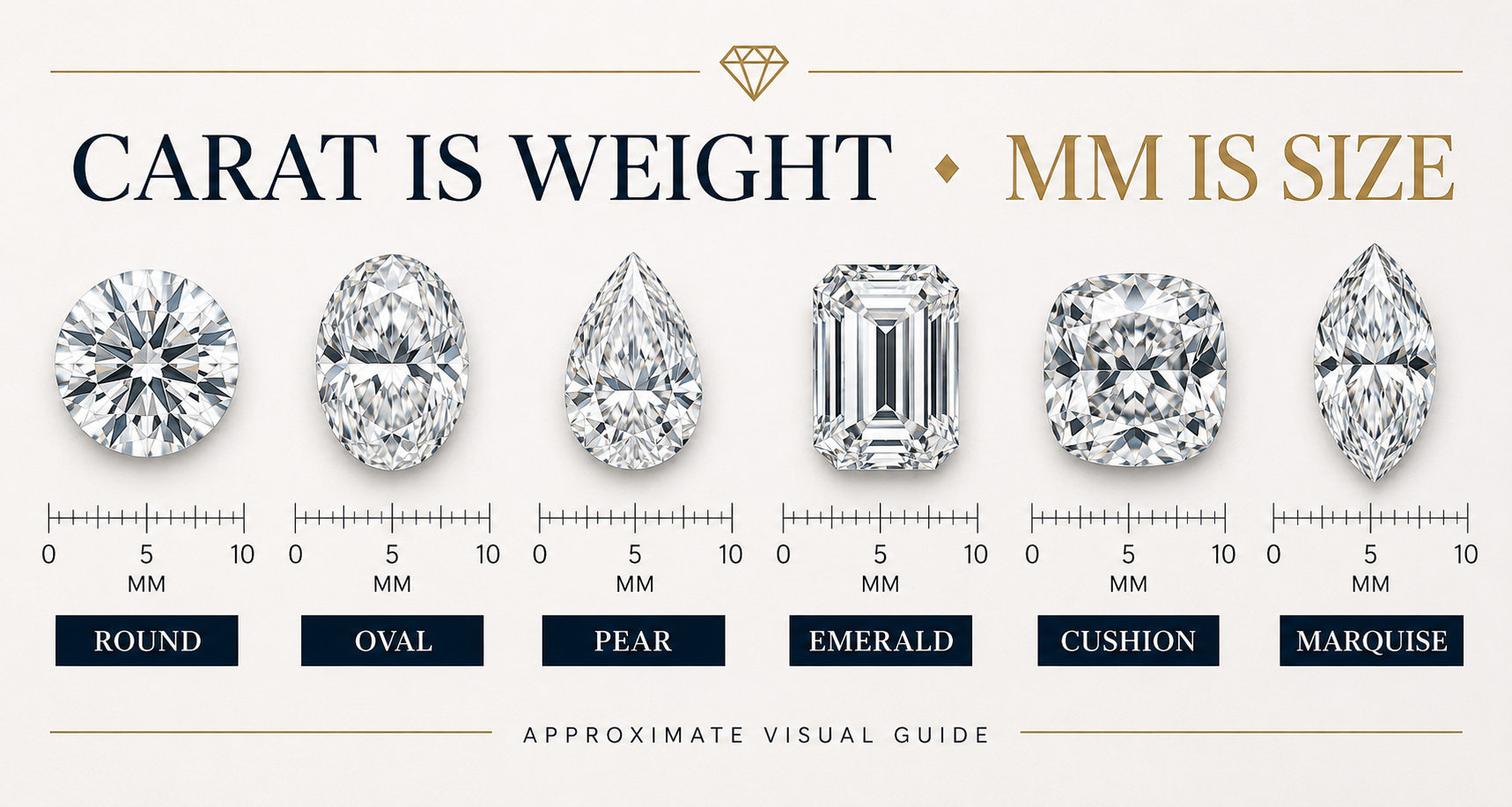
Carat weight tells you how much a diamond weighs. Millimetre measurements tell you how large it appears from above.
A well-proportioned 1-carat round brilliant diamond commonly measures approximately 6.4–6.5 mm in diameter, while a 2-carat round diamond commonly measures approximately 8.0–8.2 mm. Fancy-shaped diamonds require both length and width measurements, and their visible size can vary considerably according to shape, proportions and depth.
Use this diamond size chart to compare approximate measurements for round, oval, cushion, princess, emerald, radiant, pear, marquise, Asscher and heart-shaped natural diamonds.
Quick Answer: How Large Is a One-Carat Diamond?
A one-carat round brilliant diamond usually measures approximately 6.4–6.5 mm in diameter.
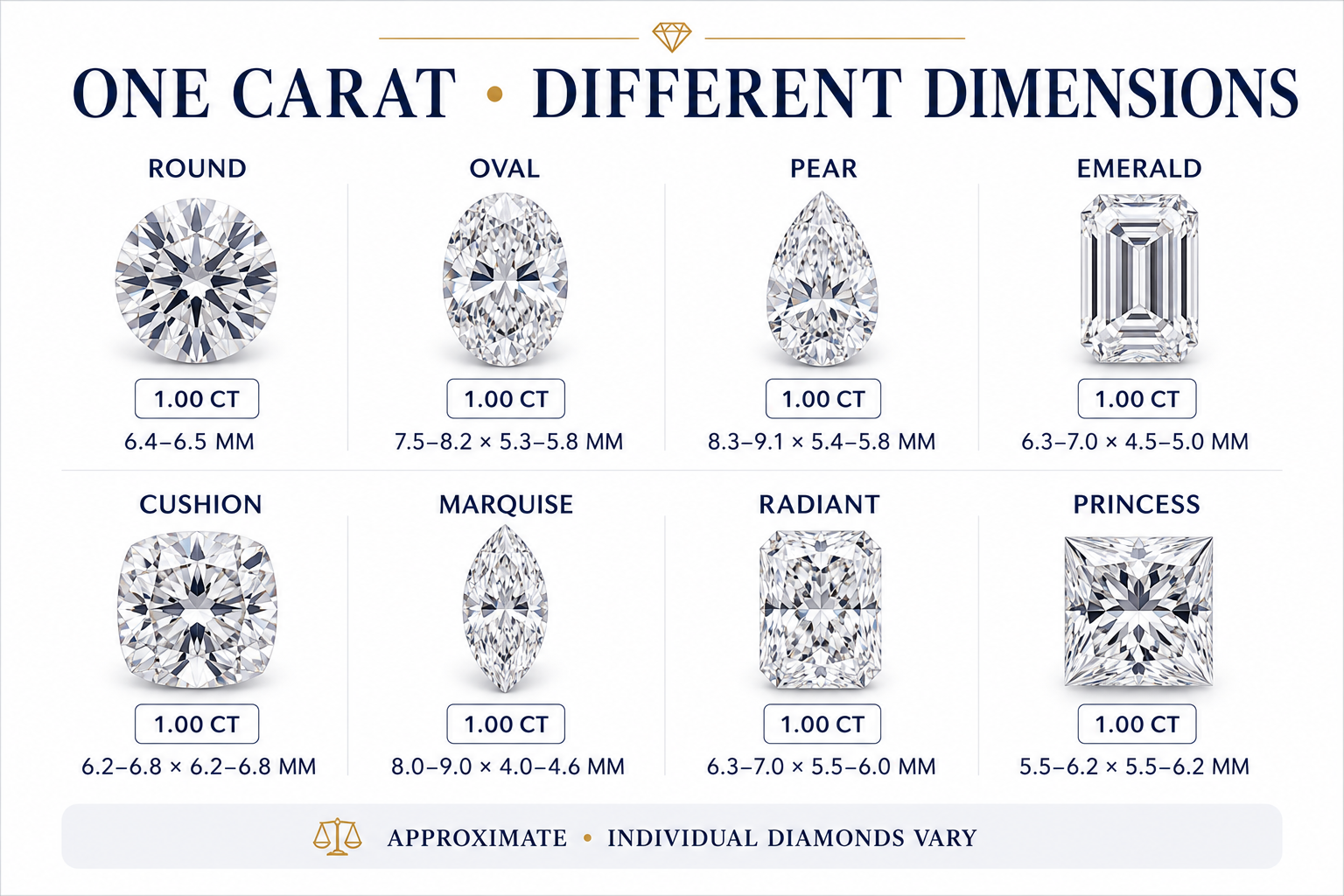
A one-carat fancy-shaped diamond can have very different measurements:
- Round: approximately 6.4–6.5 mm
- Oval: approximately 7.5–8.2 × 5.3–5.8 mm
- Pear: approximately 8.3–9.1 × 5.4–5.8 mm
- Marquise: approximately 9.5–10.5 × 4.7–5.3 mm
- Emerald: approximately 6.5–7.0 × 4.5–5.0 mm
- Radiant: approximately 6.5–7.3 × 5.0–5.5 mm
- Square cushion: approximately 5.5–6.1 mm
- Princess: approximately 5.3–5.6 mm
- Asscher: approximately 5.3–5.7 mm
- Heart: approximately 6.3–6.8 mm
Two one-carat diamonds can therefore have noticeably different outlines and face-up dimensions.
Diamond Carat-to-MM Converter
Compare a Diamond’s Approximate Size
Approximate Face-Up Measurements
6.4–6.5 mm
This is an estimated reference range. The actual diamond may have different measurements because of its depth, proportions, girdle, outline and length-to-width ratio.
Diamond Size Chart by Shape
The following table shows approximate face-up measurements at commonly searched carat weights.
For round diamonds, the measurement is the approximate diameter. For fancy shapes, measurements are shown as approximate length × width.
| Diamond shape | 0.50 ct | 1.00 ct | 1.50 ct | 2.00 ct | 3.00 ct |
|---|---|---|---|---|---|
| Round | 5.0–5.2 mm | 6.4–6.5 mm | 7.3–7.5 mm | 8.0–8.2 mm | 9.2–9.4 mm |
| Oval | 5.8–6.3 × 3.8–4.2 mm | 7.5–8.2 × 5.3–5.8 mm | 8.5–9.2 × 6.0–6.5 mm | 9.5–10.5 × 6.7–7.2 mm | 11.0–12.0 × 7.5–8.0 mm |
| Cushion | 4.7–5.0 mm | 5.5–6.1 mm | 6.3–6.8 mm | 7.0–8.0 mm | 8.0–9.0 mm |
| Princess | 4.3–4.6 mm | 5.3–5.6 mm | 6.2–6.6 mm | 6.8–7.2 mm | 7.8–8.2 mm |
| Emerald | 5.5–6.0 × 3.8–4.2 mm | 6.5–7.0 × 4.5–5.0 mm | 7.3–7.8 × 5.2–5.7 mm | 8.3–8.8 × 6.0–6.5 mm | 9.3–10.0 × 6.8–7.5 mm |
| Radiant | 5.5–6.0 × 4.0–4.5 mm | 6.5–7.3 × 5.0–5.5 mm | 7.2–7.8 × 5.6–6.1 mm | 7.8–8.5 × 6.2–7.0 mm | 9.0–9.8 × 7.0–7.8 mm |
| Pear | 6.5–7.3 × 4.3–4.7 mm | 8.3–9.1 × 5.4–5.8 mm | 9.5–10.2 × 6.2–6.6 mm | 10.5–11.5 × 6.8–7.3 mm | 12.0–13.0 × 7.8–8.3 mm |
| Marquise | 7.8–8.5 × 3.8–4.2 mm | 9.5–10.5 × 4.7–5.3 mm | 11.5–12.3 × 5.7–6.2 mm | 12.5–13.5 × 6.2–6.8 mm | 14.5–15.5 × 7.0–7.7 mm |
| Asscher | 4.3–4.6 mm | 5.3–5.7 mm | 6.2–6.6 mm | 6.8–7.2 mm | 7.8–8.2 mm |
| Heart | 4.8–5.2 mm | 6.3–6.8 mm | 7.2–7.6 mm | 7.8–8.3 mm | 8.8–9.3 mm |
These ranges are intended for visual comparison. They should not be used to manufacture a setting or confirm whether a diamond will fit an existing piece of jewellery.
Round Diamond Size Chart
Round brilliant diamonds use diameter measurements. A grading report normally records the minimum diameter, maximum diameter and total depth.
| Carat weight | Approximate diameter |
|---|---|
| 0.01 ct | 1.3 mm |
| 0.02 ct | 1.7 mm |
| 0.03 ct | 2.0 mm |
| 0.05 ct | 2.4 mm |
| 0.06 ct | 2.5 mm |
| 0.10 ct | 3.0 mm |
| 0.20 ct | 3.8 mm |
| 0.25 ct | 4.0–4.1 mm |
| 0.30 ct | 4.3 mm |
| 0.40 ct | 4.7–4.8 mm |
| 0.50 ct | 5.0–5.2 mm |
| 0.75 ct | 5.7–5.9 mm |
| 1.00 ct | 6.4–6.5 mm |
| 1.25 ct | 6.8–7.0 mm |
| 1.50 ct | 7.3–7.5 mm |
| 1.75 ct | 7.7–7.9 mm |
| 2.00 ct | 8.0–8.2 mm |
| 2.50 ct | 8.7–8.9 mm |
| 3.00 ct | 9.2–9.4 mm |
| 4.00 ct | 10.1–10.3 mm |
| 5.00 ct | 10.9–11.1 mm |
A diamond outside these ranges is not automatically poorly cut. Its complete proportions, light performance, girdle and visible appearance must be assessed before reaching a conclusion.
Small Round Diamond MM-to-Carat Chart
Small round diamonds are frequently selected by millimetre size for pavé, halo, side-stone and matched jewellery applications.
| Approximate diameter | Approximate weight per diamond |
|---|---|
| 1.0 mm | 0.005 ct |
| 1.3 mm | 0.01 ct |
| 1.5 mm | 0.015 ct |
| 1.7 mm | 0.02 ct |
| 2.0 mm | 0.03 ct |
| 2.2 mm | 0.04 ct |
| 2.4 mm | 0.05 ct |
| 2.5 mm | 0.06 ct |
| 2.7 mm | 0.07 ct |
| 2.8 mm | 0.08 ct |
| 3.0 mm | 0.10 ct |
| 3.2 mm | 0.12 ct |
| 3.4 mm | 0.14 ct |
| 3.6 mm | 0.17 ct |
| 3.8 mm | 0.20 ct |
| 4.0–4.1 mm | 0.25 ct |
| 4.3 mm | 0.30 ct |
| 5.0–5.2 mm | 0.50 ct |
The figures are approximate weights for individual round diamonds. The total carat weight of a piece is the combined weight of all diamonds, not the weight of each stone.
What Do Carat and MM Mean?
Carat Measures Weight
Carat, abbreviated as ct, measures a diamond’s weight. One metric carat equals 200 milligrams and is divided into 100 points.
For example:
- 0.25 ct = 25 points
- 0.50 ct = 50 points
- 0.75 ct = 75 points
- 1.00 ct = 100 points
The GIA guide to diamond carat weight explains why carat should not be interpreted as a direct measurement of visible size.
Millimetres Measure Dimensions
Millimetre measurements describe the physical dimensions of a diamond.
For a round diamond, the report generally records:
minimum diameter × maximum diameter × depth
For a fancy-shaped diamond, it generally records:
length × width × depth
Length and width help you understand the face-up footprint. Depth shows how far the diamond extends from its table to its culet.
Why Can Two Diamonds of the Same Carat Look Different?
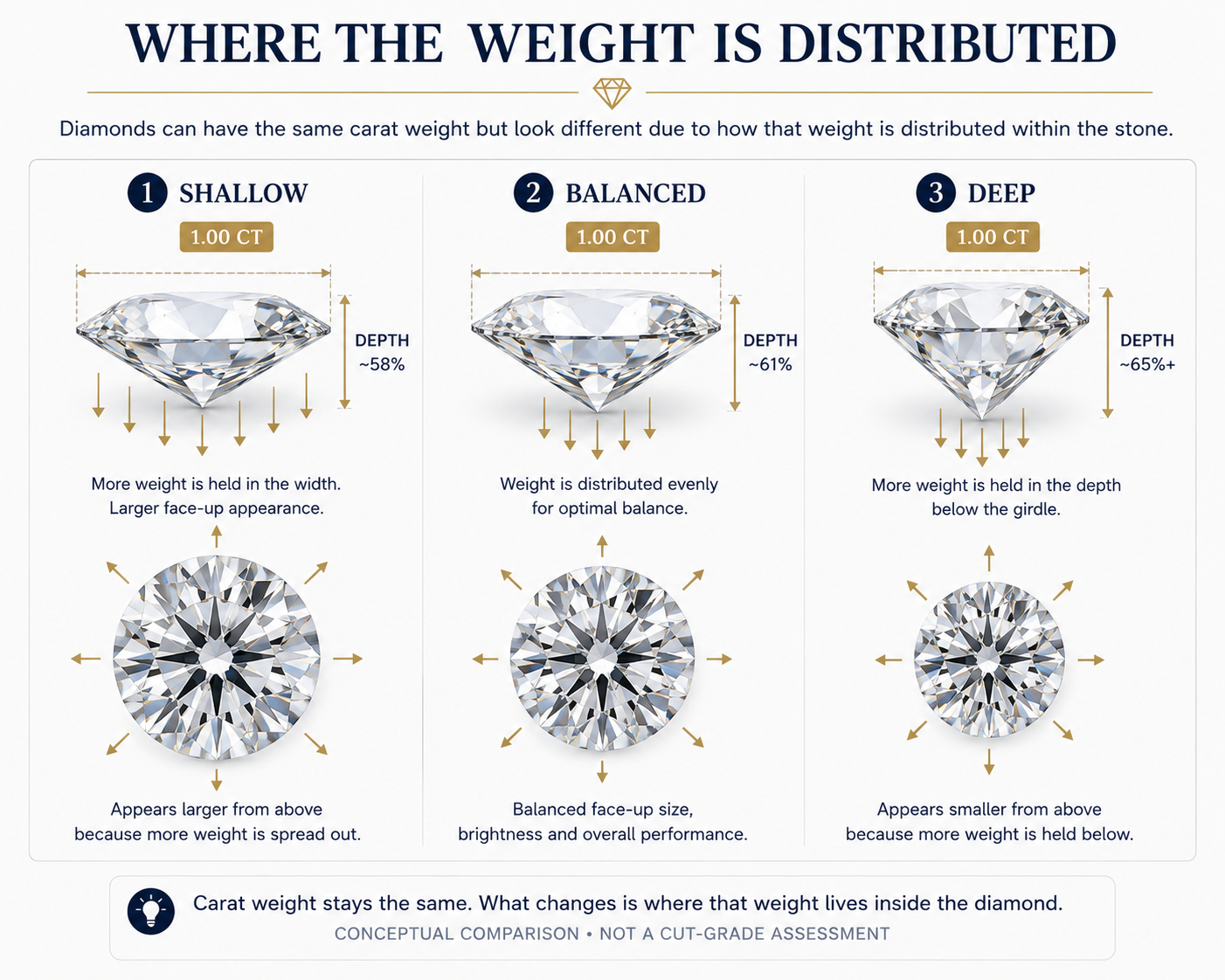
Depth
A diamond can carry a larger proportion of its weight below the girdle. This may cause it to look smaller from above than another diamond of the same weight.
A shallow diamond may have a wider face-up spread, but a larger diameter does not automatically mean better appearance or light performance.
Shape
Elongated shapes such as oval, pear and marquise can create a longer face-up outline than round or square diamonds of the same weight.
This does not mean that every elongated diamond is better. Outline, symmetry, proportions and visible bow-tie contrast must also be considered.
Length-to-Width Ratio
Fancy-shaped diamonds can be compact, moderately elongated or strongly elongated.
Two one-carat oval diamonds may have different length and width measurements because one has a longer outline. The same variation occurs with cushion, pear, radiant, marquise and emerald-cut diamonds.
Girdle Thickness
The girdle forms the diamond’s outside edge. A very thick girdle can retain additional weight without producing a corresponding increase in face-up size.
Cut and Proportions
The diamond’s table, depth, crown, pavilion and overall proportions influence its face-up dimensions and visual performance.
For round brilliants, cut quality should not be sacrificed simply to obtain a slightly larger diameter.
Which Diamond Shape Looks Largest for Its Carat Weight?
Elongated marquise, pear and oval diamonds often create a larger-looking outline because their length covers more of the finger.
Emerald and elongated radiant diamonds can also provide considerable finger coverage. Cushion, Asscher and princess cuts may appear more compact because more of their weight can be distributed through their depth or square outline.
Visible size should not be judged by length alone. Width, surface area, setting style, brilliance and the balance of the complete design all affect how large a diamond appears.
What Size Is a Two-Carat Diamond?
A two-carat round brilliant diamond commonly measures approximately 8.0–8.2 mm in diameter.
Approximate two-carat fancy-shape measurements include:
- Oval: 9.5–10.5 × 6.7–7.2 mm
- Pear: 10.5–11.5 × 6.8–7.3 mm
- Marquise: 12.5–13.5 × 6.2–6.8 mm
- Emerald: 8.3–8.8 × 6.0–6.5 mm
- Radiant: 7.8–8.5 × 6.2–7.0 mm
- Cushion: 7.0–8.0 mm
- Princess: 6.8–7.2 mm
- Asscher: 6.8–7.2 mm
- Heart: 7.8–8.3 mm
Always compare the measurements shown on the grading report rather than assuming every two-carat diamond has the same visible size.
How to Compare Diamond Size Correctly
1. Compare the Complete Measurements
Do not compare two diamonds using carat weight alone. Review their length, width and depth.
For round diamonds, compare the minimum and maximum diameters. A large difference between them may indicate an out-of-round outline.
2. Consider the Shape
Only compare diameter directly when examining round diamonds. Fancy shapes require both length and width.
3. Review the Length-to-Width Ratio
Length-to-width ratio is calculated by dividing the diamond’s length by its width.
For example:
9.0 mm ÷ 6.0 mm = 1.50 ratio
The preferred ratio is partly a matter of appearance and jewellery design. There is no single ratio that is automatically best for every buyer.
4. Check the Grading Report
Use the measurements printed on the actual grading report. Dalila’s guide to reading a GIA diamond report explains where the principal measurements and grading information appear.
5. Review Images or Video
Measurements describe size but cannot completely communicate outline, symmetry, brilliance, contrast or bow-tie visibility.
Where available, review clear images or video alongside the report information.
How Large Will a Diamond Look on a Finger?
The appearance of a diamond on a hand depends on more than carat weight.
Important factors include:
- Diamond shape
- Face-up dimensions
- Finger and ring size
- Band width
- Prong or bezel design
- Solitaire, halo or three-stone setting
- Orientation of the diamond
- Surrounding side stones
- Viewing distance and photography
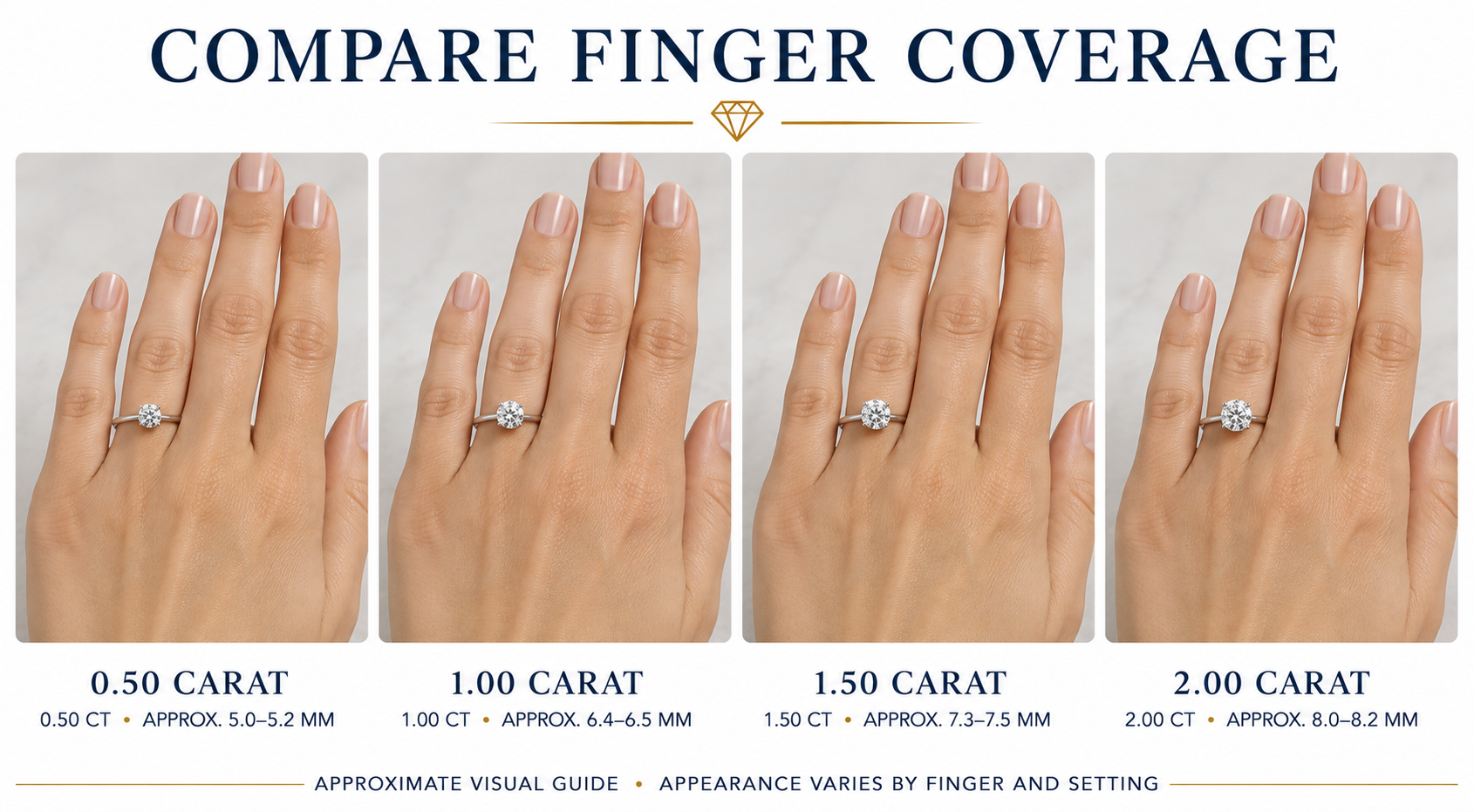
Online illustrations should therefore be treated as visual guides rather than exact representations.
If Dalila provides a printable size guide, print it at 100% scale and verify the calibration line with a ruler. Do not judge actual size from an uncalibrated phone or computer screen.
Choosing a Diamond for an Existing Setting
If a diamond must fit an existing setting, carat weight alone is insufficient.
Provide:
- Required length
- Required width
- Maximum acceptable depth
- Diamond shape
- Corner or point requirements
- Setting measurements
- Reference images
- Existing diamond report, where available
The setting should be assessed by a qualified jeweller before another diamond is purchased. A small dimensional difference can affect whether the stone can be held safely.
Dalila’s custom diamond sourcing service can be used to request a natural diamond within a specific measurement range, subject to availability.
Choosing Matched Diamonds
Diamonds for earrings, side stones and multi-stone jewellery should not be matched using carat weight alone.
A convincing pair should normally be compared for:
- Length and width
- Visible face-up size
- Shape and outline
- Length-to-width ratio
- Colour
- Clarity
- Faceting pattern
- Fluorescence
- Overall visual balance
If you require a pair or group with controlled dimensions, submit the complete requirement through Dalila’s DS4U service.
Does a Larger-Looking Diamond Always Mean a Better Diamond?
No. A larger face-up measurement can be appealing, but visible size is only one consideration.
A diamond with excessive spread may be too shallow. A diamond with hidden weight may appear smaller than expected. Neither conclusion can be reached from measurements alone.
Review the diamond’s complete proportions, grading report, outline and appearance before making a decision.
Price also depends on carat weight, shape, colour, clarity, cut quality, grading report, rarity and current availability. Dalila’s diamond price guide explains the main pricing factors.